
Ever crammed for a test, aced it, then forgot everything a week later? You know the drill. It happens to most of us. But what if you could fix that by teaching a friend instead?
Teaching others speeds up your learning. It forces deeper understanding and sticks knowledge in your brain longer. Psychologists call this the protégé effect. You prepare better when you expect to teach. The famous Feynman technique takes it further. You explain ideas simply, like to a child. This uncovers what you don’t know.
Studies back it up. The Learning Pyramid shows people retain about 90% of what they teach others. That’s way higher than 10% from reading or 20% from hearing lectures. This post breaks down the brain science, key studies, easy techniques, and real examples. You’ll get steps to try today. Stick around, and you’ll learn how to master any topic quicker.
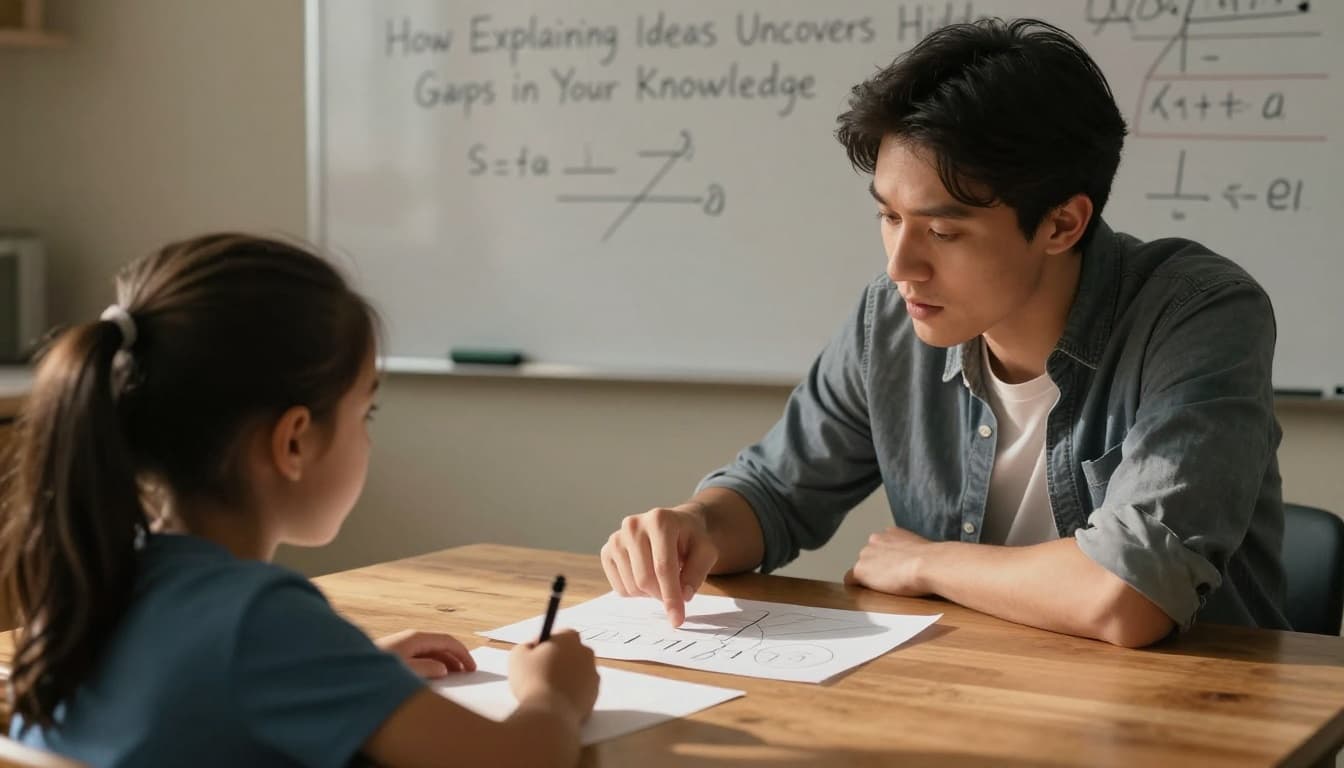
How Explaining Ideas Uncovers Hidden Gaps in Your Knowledge
You think you get a topic. Then you try to teach it. Suddenly, holes appear everywhere. Teaching shines a light on those weak spots. It pushes you to simplify complex stuff. You organize thoughts clearly. As a result, you fill gaps fast.
Passive reading feels easy. You nod along. But active teaching? That’s different. You must rephrase ideas. You anticipate questions. This builds stronger connections in your brain. For example, picture explaining fractions to your sibling. You stumble on decimals. Now you restudy that part right away.
Repetition helps too. You say it out loud multiple times. Questions from the listener add fresh views. In short, teaching turns fuzzy knowledge into solid mastery.
Spotting What You Don’t Know Before It’s Too Late
You start explaining. Words fail you. Boom, there’s a gap. Teaching reveals it early. You fix it before a real test hits.
Take the Feynman style. Pretend you teach an imaginary kid. Write it simply. Get stuck? Go back to sources. This method spots trouble fast. You restudy targeted parts. Overall learning accelerates because you skip wasted review time.
Besides, simplifying forces true grasp. No jargon hides confusion. You own the idea completely.
Seeing Topics from Fresh Angles Through Others’ Questions
Listeners ask smart questions. They challenge your take. You see the topic anew. This builds a fuller picture.
Consider teaching swim strokes. A friend asks why your arm pulls that way. You rethink your form. It improves for you both. Science subjects shine here too. Questions push you past surface facts. In contrast, solo study misses those sparks.
Unlock the Protégé Effect for Better Memory and Motivation
Just knowing you’ll teach changes how you learn. You organize notes better. You focus on key points. Recall jumps. That’s the protégé effect in action.
A 2014 study by John Nestojko tested it. Students read passages. Some prepped to teach. Others prepped for a test. The teach group recalled more facts. They linked ideas tighter. Check the full Nestojko study details here. Expecting to teach boosted them, even without actual teaching.
A meta-analysis of 39 experiments agrees. Advance notice works best. Prep before learning? Retention soars. Surprise assignments later? Little gain.

Motivation rises too. You study harder for someone else. Confidence grows as you see progress. It’s like prepping a big presentation. You nail every detail.
The Learning Pyramid nails why. See an overview of retention rates. Active methods beat passive ones.
What the Studies Show About Prep-to-Teach Power
Nestojko’s experiment split students. Teach-preppers made outlines. They grouped facts logically. Test-preppers skimmed more. On recall tests, teach group won. Organization predicted success.
The meta-analysis scanned dozens of trials. Prep announced upfront crushes it. This holds for school facts or job skills. No fresh 2026 data changes that.
Why Teaching Tops the Learning Pyramid for Sticking Power
Lectures stick at 5%. Reading hits 10%. Discussions reach 50%. Practice by doing gets 70%. Teaching others? 90%. Active output wires your brain deep.
You process info multiple ways. Say it, hear feedback, adjust. Repetition plus engagement equals long-term memory. Passive input fades quick. Teaching locks it in.
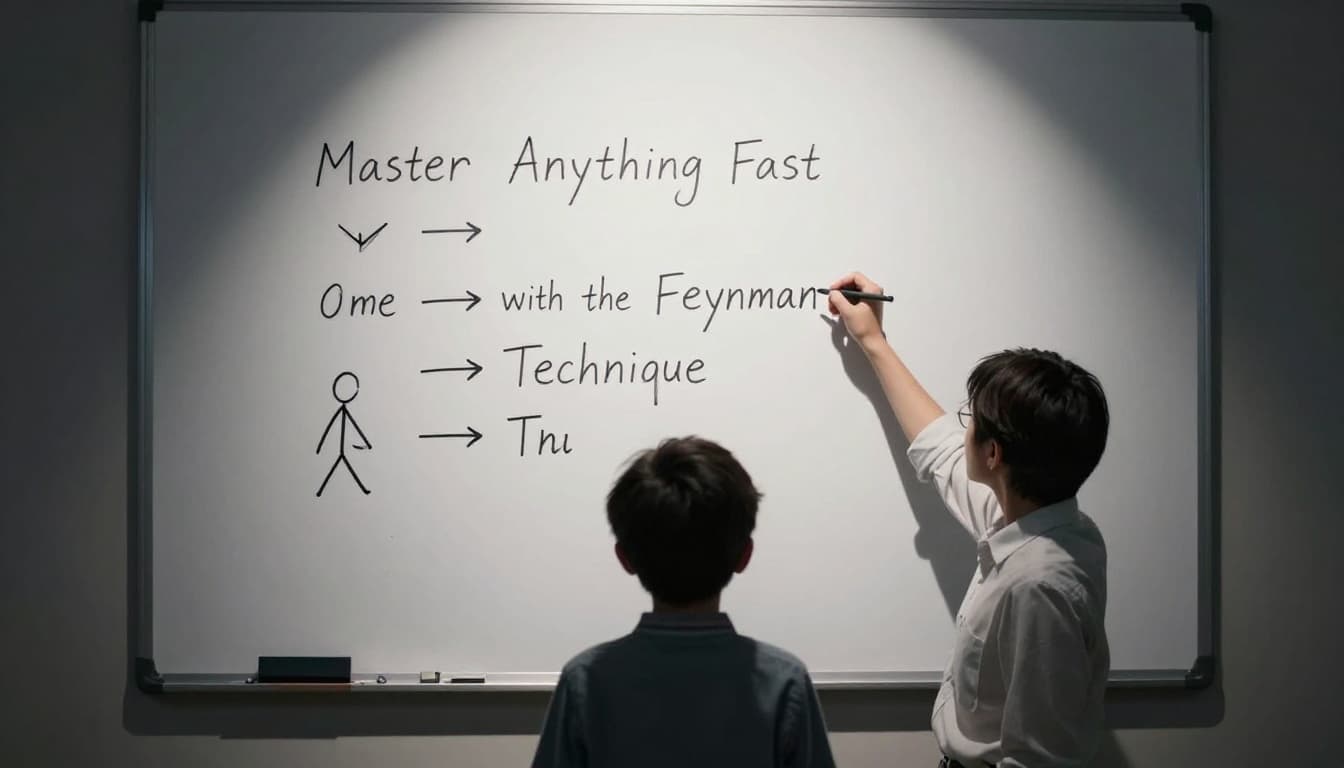
Master Anything Fast with the Feynman Technique
Richard Feynman cracked tough physics by teaching simply. His technique works for anyone. Pretend you explain to a kid. Use plain words. No fancy terms.
It uncovers gaps quick. You simplify step by step. Stuck spots scream for review. Repetition seals it. Combine this with real teaching, and you fly.
Benefits stack up. Confidence surges. Mastery comes faster. Start solo if no one’s around. Then share.
For physics, say gravity pulls apples down. Use a ball dropping. For languages, act out verbs. Gaps show; you fill them.
Learn more in this Feynman Technique guide.
Step-by-Step Guide to Feynman-Style Teaching
Follow these steps:
- Pick a concept. Write its name at top of a page.
- Explain it like to a child. Use simple words. Draw pictures.
- Spot gaps or jargon. Go back to books. Fill holes.
- Simplify more. Use analogies. Rubber ball for gravity bounce.
- Review and teach for real. Repeat till smooth.
Write it out first. Analogies stick best. No equations unless needed.
Real-Life Proof and Easy Ways to Start Teaching Today
Proof shows up everywhere. In 1980s Germany, Jean-Pol Martin had teens teach languages. They owned the material. Motivation spiked. Read about Jean-Pol Martin’s approach.
Classrooms use it too. Kids write letters to future students. They clarify their notes. One class said, “Everyone invested in improving.” Peer feedback in writing boosts all.
Everyday wins count. Teach swim form; refine yours. Guitar chords to friends; fingers strengthen.

Start easy:
- Teach a friend one skill this week.
- Record a video explanation.
- Write a blog post.
- Tutor a kid.
- Post on forums or apps.
Build community. Take ownership. Avoid surprise teaching; plan ahead for max effect.
Classroom and Everyday Success Stories
Martin’s teens taught peers French. They prepped deeper. Scores rose across ages.
One teacher had kids explain math via drawings. Gaps closed fast. A writing class swapped feedback letters. Investment grew. Quotes captured it: “We all got better together.”
Skills transfer. Swimmers teach dives; form sharpens. Guitar groups jam and learn.
Teaching beats solo grind every time.
Teaching uncovers gaps, boosts retention to 90%, and motivates through the protégé effect. Feynman makes it simple to start solo. You’ve got the tools.
Pick one topic now. Find a friend or use the technique alone. Watch learning speed up.
Who will you teach first? Share your story in the comments. Subscribe for more tips on smarter study.