
Remember Sarah? She nailed coding bootcamp last year, building apps that impressed everyone. Then work piled up, kids needed attention, and life got hectic. Six months later, she stares at her old code and draws a blank; it’s all gone.
That fade hits hard. Your brain sheds unused skills fast unless you fight back. But here’s the kicker: jobs shift quicker than ever. By 2030, 85% of bosses plan reskilling to close gaps as AI shakes things up, with 39% of core skills changing. In 2026 alone, expect more churn, from AI specialists booming to old roles vanishing.
Skill retention changes that. It means keeping what you learn strong for years through brain science and simple habits. You lock in knowledge so it sticks, no matter the busyness.
This post breaks it down. We’ll start with neuroscience basics on why forgetting happens and how to stop it. Next, proven techniques like spaced repetition and deliberate practice that rebuild strength fast. Then, daily habits that fit any schedule. Finally, top 2026 tools, like Anki for custom flashcards, to automate the wins.
Follow these steps, and you’ll retain skills long term. Stay sharp, beat the curve, and thrive for life. Ready to dive in?
Grasp the Brain Science of Lasting Skills
Your brain acts like a muscle when you learn skills. Practice strengthens connections between neurons, called synapses. This process, known as neuroplasticity, builds pathways that store what you pick up. But those paths weaken fast without care; skills fade because unused links prune away.
Think of it this way. You hit the gym, and muscles grow with reps. Skip sessions, and strength drops. Brains work the same. Daily practice wires circuits for guitar riffs or coding loops. However, forgetting kicks in quick; most people lose 70% of new info in a day without review.
Here’s a cool fact: your brain replays practice during quiet moments. This locks skills into long-term memory. In 2026, reports show neuroplasticity tools exploding to $8.1 billion, with apps and wearables boosting retention through targeted training. Neurofeedback helps too; it tunes brain waves for better hold.
Focused repetition fights fade-out. Space sessions, add challenge, and watch paths solidify. So, build habits now. You’ll keep skills sharp for years.

Sleep’s Hidden Role in Skill Lock-In
Sleep turns fresh practice into keepers. While you rest, your brain replays the day’s moves. This boosts consolidation; short-term gains shift to permanent storage in areas like the hippocampus.
Studies back it up. One found sleep spindles, quick brain bursts, cluster to strengthen motor memories, like finger patterns on keys. Participants kept skills better overnight versus staying awake. As a result, retention jumped.
Get 7-9 hours right after sessions. Naps help too, but full nights work best. Your brain needs that downtime to rewire. Skip it, and tomorrow’s recall suffers. Prioritize rest; it’s free science for lasting wins.

For details on sleep’s motor boost, check this study on spindle clustering. Simple change, big payoff.
Master Spaced Repetition to Beat Forgetting
You forget most new skills fast. That’s the forgetting curve at work, a pattern Hermann Ebbinghaus spotted over a century ago. Without reviews, retention drops by 70% in a day. But spaced repetition flips that. You review material at growing intervals: today, in two days, then a week, and a month later. This timing hits just when your brain needs a nudge, so info shifts to long-term storage.
Take guitar chords. You learn A minor and E major on day one. Practice them right away. Review after two days, when recall slips. Hit them again in a week, then monthly. Chords stick because each session strengthens the memory trace. Research shows this boosts retention up to 200% over cramming. A 2024 review of 29 studies found 37% better long-term hold. Medical students in a 2025 meta-analysis scored higher too, with gains like jumping grades.
Start small to make it stick. Pick three to five items, like key code snippets or vocab words. Test yourself actively; don’t just reread. Free apps schedule reviews, or set phone timers. Benefits pile up fast. Skills endure without marathon sessions. Your brain builds durable paths, so you recall under pressure.
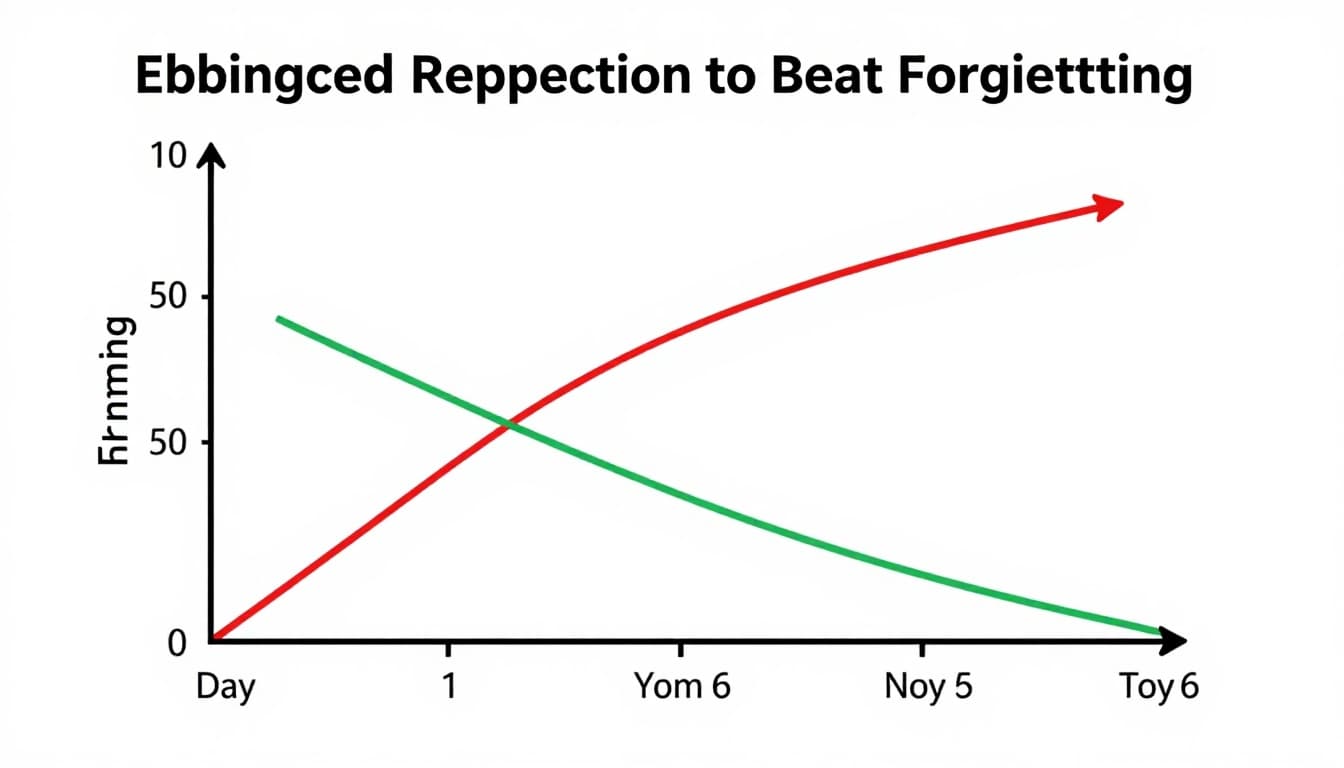
For more on the Ebbinghaus forgetting curve experiment, check Penn State’s breakdown. Results appear in weeks.
Build Your Spaced Schedule Step by Step
Ready to build yours? Pick a skill like Spanish vocabulary. Start with 10 common words: hola (hello), adios (goodbye), gracias (thank you), and so on. Learn them fresh on day one. Review that evening.
Here’s a simple four-week plan. Track daily in a notebook or app. Note what sticks and what needs extra reps. Adjust intervals if recall falters; shorten them slightly.
- Week 1: Learn on day 1. Review day 1 evening, day 2, day 4. Test by writing words from English prompts. Add five more words midweek.
- Week 2: Review full set day 7 and day 10. Quiz yourself without notes. Log success rate; aim for 80%. New words? Space them similarly.
- Week 3: Hit everything day 14 and day 18. Mix in sentences, like “Hola, amigo.” Track progress; celebrate jumps in speed.
- Week 4: Final push day 21 and day 28. Review monthly after. Tally retention; most hit 90% now.
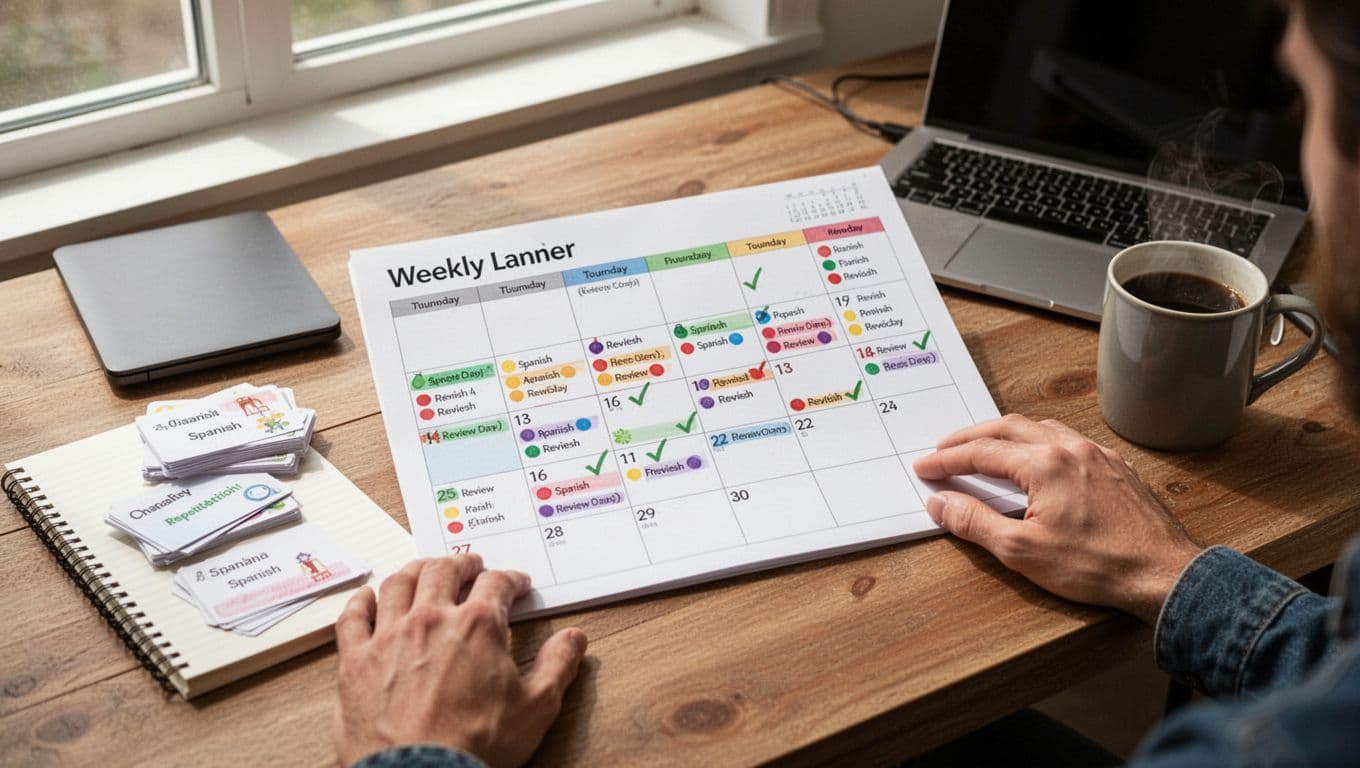
Cramming fails because it overloads short-term memory. Space fights that; brains consolidate better. After four weeks, words feel automatic. Scale up for coding loops or piano scales next. Track weekly to stay honest. You’ll see skills lock in for good.
Practice Smarter With Deliberate Focus
Mindless repetition feels easy. You run scales or code the same loop over and over. Yet skills still slip away because you ignore weak spots. Deliberate practice changes that. You zero in on flaws, seek feedback, and push past comfort zones. This method, from psychologist K. Anders Ericsson’s research, builds expertise that lasts. It strengthens neural paths so you retain skills amid job shifts.
Consider Maria, a concert pianist. She played full pieces daily but stumbled on fast arpeggios during shows. So she broke them into chunks. She slowed the tempo, recorded herself, and got coach feedback. After weeks of targeted reps, those runs flowed effortlessly. Now she performs without fear. Coders do the same with debugging; they isolate buggy functions, trace errors step by step, and test fixes until clean.
Studies show this approach doubles retention over casual practice. Therapists using it improved client outcomes from 40% to 65%. It boosts career agility too. Workers master new roles faster in changing markets. As a result, you stay sharp as AI reshapes jobs.
Here’s how to start. First, break your skill into small parts, like chord progressions or API calls. Next, practice the toughest chunk for 20 minutes daily. Get feedback from a peer or video review. Track changes and adjust. Repeat until smooth, then add speed.

For a clear breakdown, see James Clear’s guide to deliberate practice.
Spot and Fix Your Skill Weaknesses
Weak spots sabotage retention. You breeze through easy parts but falter elsewhere. Spot them with quick self-tests. Time yourself on a routine task, like typing code or strumming riffs. Note where speed drops or errors spike.
Ask for feedback next. Share work with a mentor or online group. They point out blind spots you miss. Then attack those gaps head-on. Spend 80% of practice time there. Isolate the issue, drill slowly, then build speed.
Keep a progress journal to stay accountable. Log sessions, success rates, and tweaks. Review weekly. You’ll see gains and adjust fast.
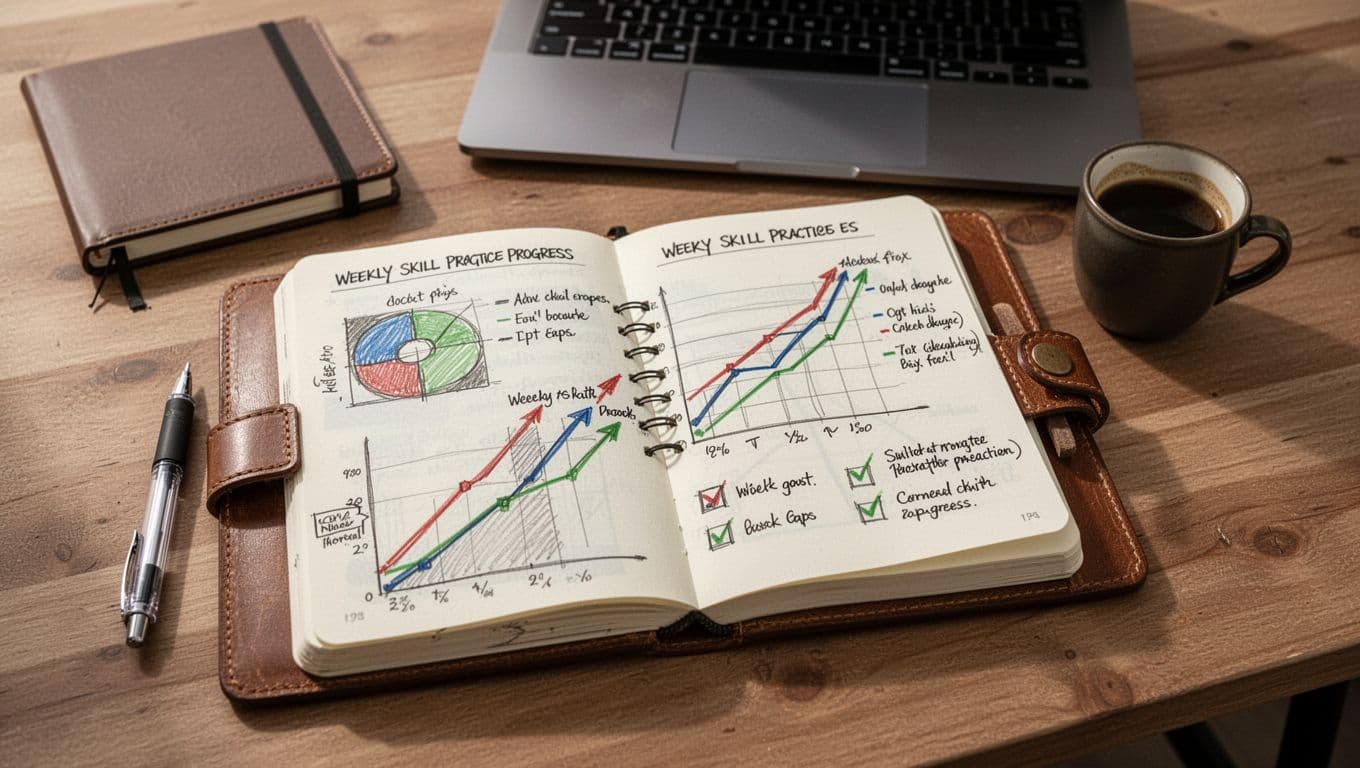
One coder fixed debugging woes this way. Errors fell 70% in a month. Your turn yields similar wins.
Daily Habits That Keep Skills Sharp Forever
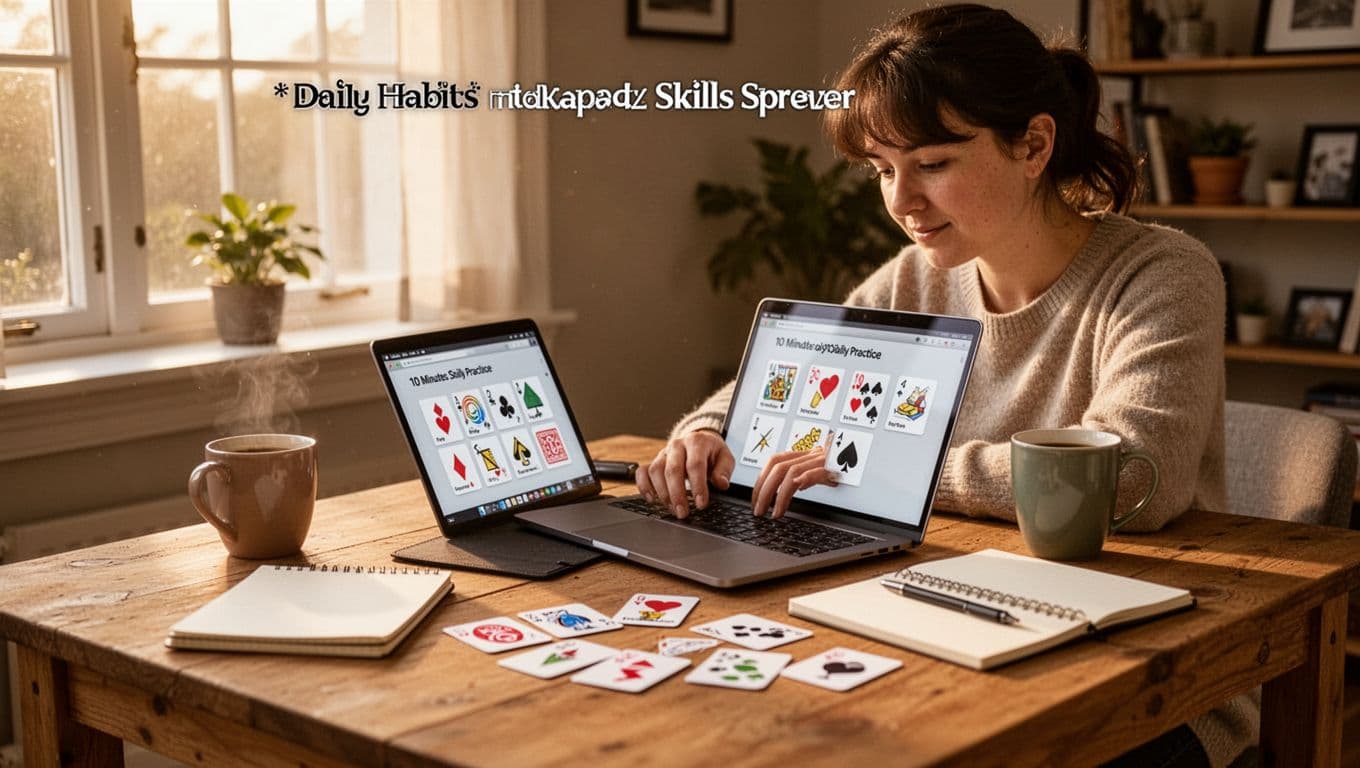
Busy days make skill practice tough. Yet small changes lock in what you learn. Microlearning works best here: 10 to 15 minutes daily fits anywhere. Workers love it because completion rates hit 83% for short bursts. Plus, these habits boost wellbeing and cut burnout risk through rest and checks. Start with one today. You’ll retain skills for life.
Link Practice to What Motivates You Most
Tying skills to your goals doubles retention. Studies show SMART goals lift performance because they spark drive. You practice more when it matters.
Take coding. Link it to real projects, like building an app for your side hustle. That career win keeps you going. Or tie piano to fun family nights; play songs they love. Joy flows in, and sessions stick.
Here’s an actionable list to start:
- Pick your why: Write one goal, like “code to land a promotion” or “play guitar for beach trips.”
- Daily tie-in: Spend 10 minutes linking practice to that spark, such as coding a feature for your dream job.
- Weekly check: Sunday evenings, rate progress on a 1-10 scale. Adjust if motivation dips.
- Rest smart: Skip a day weekly to recharge. Wellbeing aids hold skills longer.
One friend tied Spanish to travel dreams. He reviewed vocab before trips. Now it sticks years later. You can too. Motivation turns practice into habit.

Find a Mentor to Accelerate Your Progress
Mentors speed gains and double stay rates. Stats show mentored folks stick with skills longer; companies see higher retention. They spot blind spots you miss.
Find one easily. At work, ask your boss for pairings. Online, join platforms like LinkedIn groups or Reddit communities. Search “coding mentor” or “piano coach.” Message three prospects weekly with your goals.
Benefits stack up fast. Tips refine practice, so you retain more. Plus, accountability fights fade. Schedule 20-minute calls biweekly. Share progress journals from deliberate sessions.
A developer I know found a senior via Twitter. Her feedback cut errors by half in months. Now skills endure job hops. Rest days prevent burnout, so pair mentorship with breaks. Start reaching out today. Progress awaits. Check 2026 mentoring stats for proof.

Tap Into 2026’s Top Tools for Skill Retention
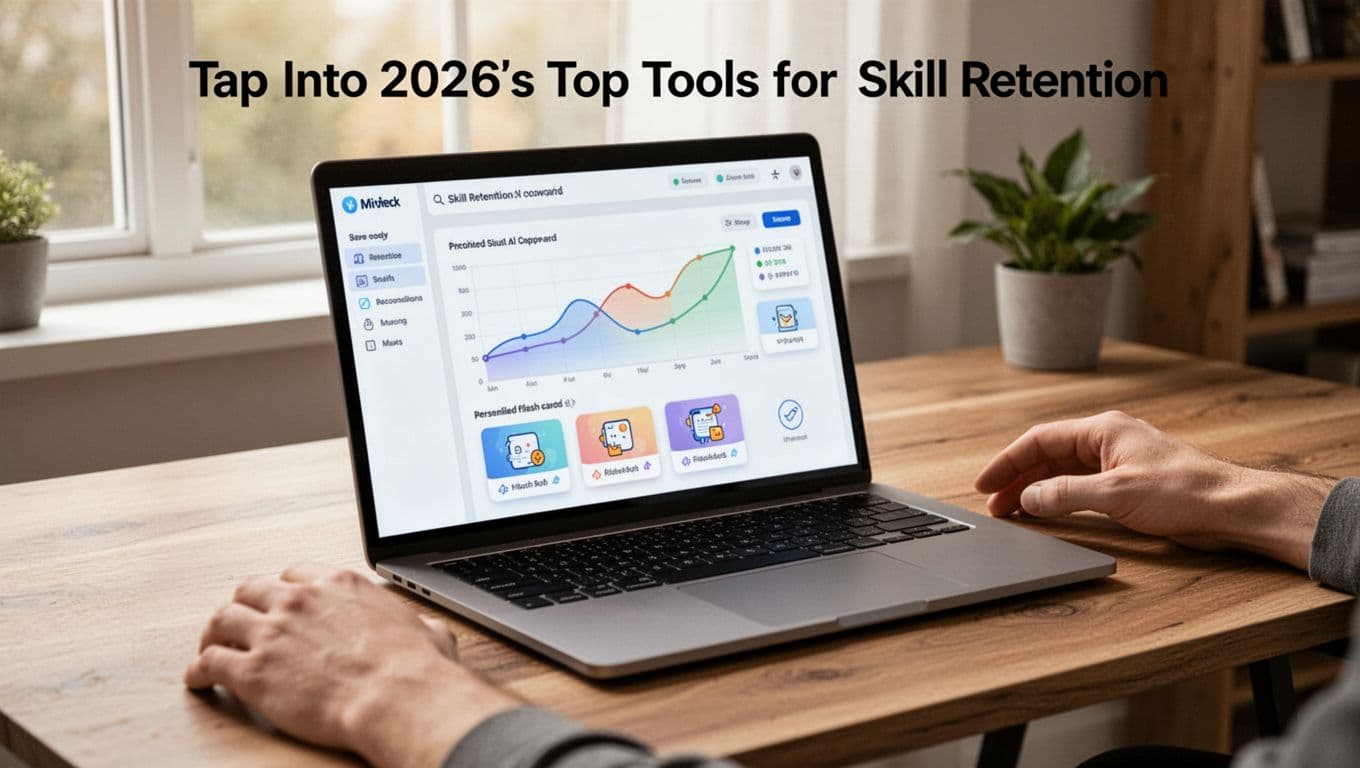
Tools make skill retention easy in 2026. They automate reviews, track progress, and fit busy lives. Companies now use AI platforms because 88% prioritize continuous learning. You get the same edge at home or work. Start with one free app, like Anki, to build habits fast.
These apps handle spaced repetition and custom plans. They predict gaps and suggest fixes. As a result, skills stick longer. Pick tools that match your goals, such as coding or languages. Then watch retention soar.
AI Platforms Build Custom Retention Plans
AI apps like TalentLMS create tailored paths. They map your skills, spot gaps, and assign short modules. About 74% of firms use similar tools for reskilling. You build paths for prompt engineering or gig work. Each step links to real tasks, so practice pays off.
Eightfold AI analyzes data for deep profiles. It flags future needs, like AI shifts. SkillPanel adds challenges and feedback. Workers validate skills through coding tests or peer reviews. Meanwhile, iMocha predicts turnover and matches roles. These hybrids blend human input with AI smarts.
Gig workers love short bursts. Platforms offer 10-minute modules for quick wins. Internal marketplaces show open roles based on your profile. Start free trials to test fit.
For TalentLMS learning paths details, see how they structure journeys.
Spaced Repetition Apps Lock In Skills Free
Anki leads free tools. It schedules flashcards perfectly. Add code snippets, guitar tabs, or vocab. The app spaces reviews, so you forget less. Handles 100,000 cards with media support. Sync across devices for on-the-go practice.
Users customize layouts and timing. Add-ons boost power. Medical students retain 37% more long-term. You do too, because it targets weak spots.
Download from the Anki official site and import decks today. Pair it with deliberate practice from earlier sections.
Future-Proof With Hybrids and Marketplaces
Human-AI mixes shine for new skills like prompt engineering. Brightspace tutors in real-time. Udemy Business delivers cheap, fresh courses. Organizations match skills to projects via marketplaces. This boosts retention and mobility.
Pick Anki first because it’s free and simple. Scale to paid platforms later. Trends show strategy-first learning wins. Your skills stay sharp as jobs change.
Conclusion
You now hold the keys to beat forgetting. Brain science shows neuroplasticity and sleep lock in skills. Spaced repetition fights the curve, while deliberate practice targets weak spots. Daily habits like microlearning and mentors keep you sharp. Tools such as Anki automate it all.
These steps build strength for life’s demands. In 2026, AI shifts jobs fast, but small efforts give you the edge. Skills stick because you review smart and practice focused. As a result, you thrive amid change.
Pick one skill today. Set a 10-minute daily habit and track it for a month. What skill will you master first?