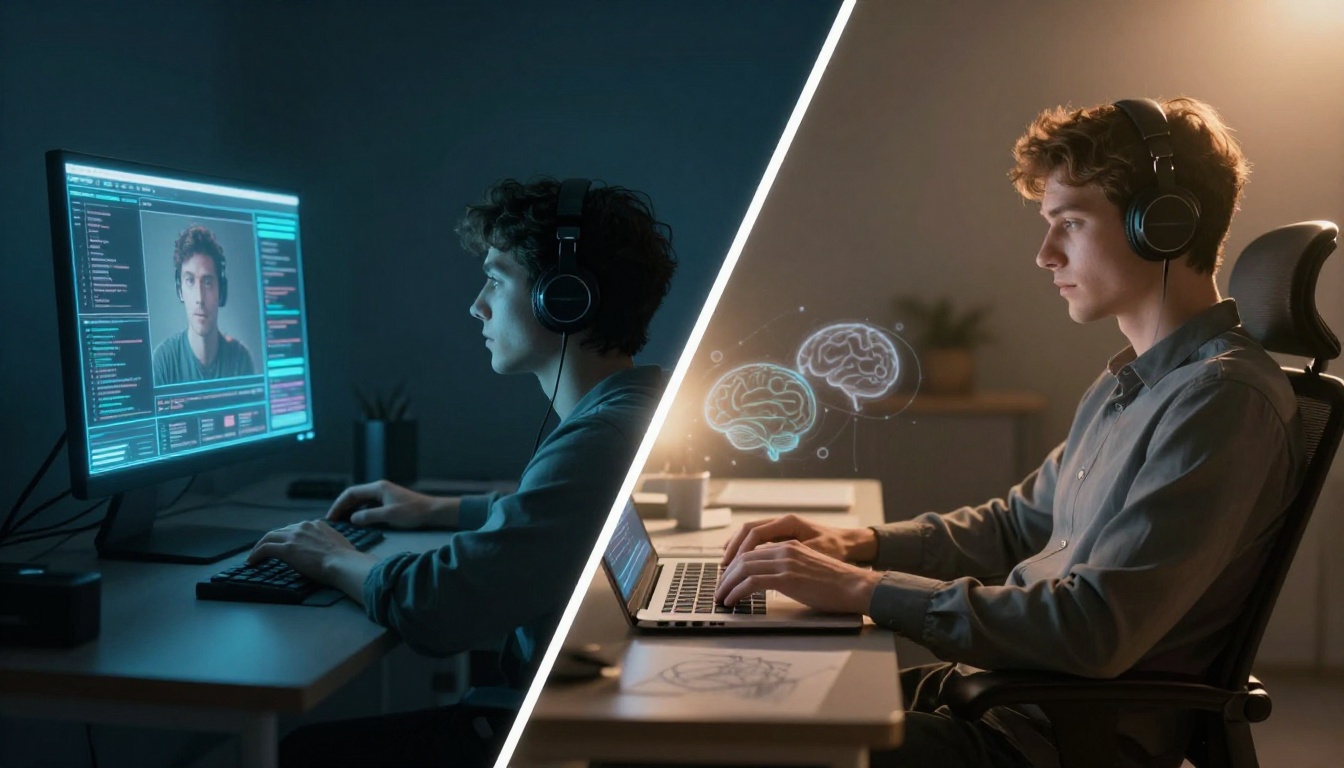
Picture this: You spend hours binge-watching tutorials on a new skill. You nod along, convinced you’re mastering it. Then, when you try to apply it, your mind goes blank.
That’s passive learning at work. It happens when you absorb info one-way through videos, podcasts, or reading without any interaction. You take it in passively, but you don’t test or use it.
Active learning flips that script. You practice right away, quiz yourself, or teach someone else. This builds real skills and sticks knowledge in your brain.
Passive learning slows you down, though. It tricks you into false confidence because it feels easy and effortless. Your brain thinks, “I got this,” but without practice, memory links stay weak. Skills don’t form properly, so you forget faster and struggle to perform.
Studies prove it. Active learners score higher on tests, like 70% versus 45% for passive groups. They retain concepts weeks later and apply them in real tasks. Passive methods fade quick because they skip the hands-on part that strengthens neural pathways.
In short, passive learning wastes your time. It keeps you stuck in shallow knowledge instead of real progress.
Stick around. You’ll get clear proof from recent research, plus simple switches to active methods that speed up your results. Next, we’ll break down exactly how passive learning fools your brain.
Why Passive Learning Feels Easy But Leaves You Stuck
Passive learning pulls you in because it flows so smoothly. You sit back, absorb the words, and your brain whispers, “This is working.” Yet this comfort hides a big problem. It builds weak connections that crumble under pressure. Passive learning slows you down by creating an illusion of progress without real skill. Let’s unpack why your brain falls for it.
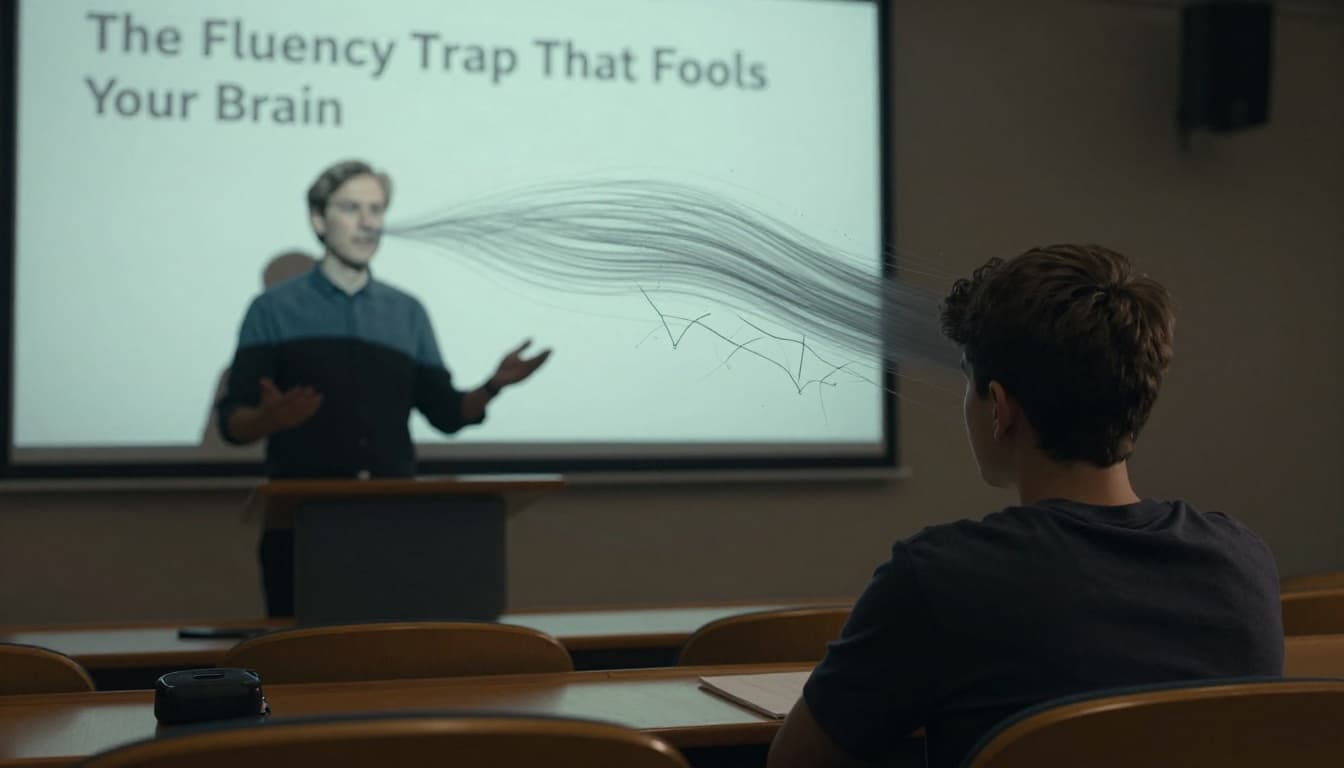
The Fluency Trap That Fools Your Brain
Ever finished a video feeling smart, then blanked on the test? That’s the fluency illusion at play. Smooth lectures or tutorials make info slide in effortlessly. Your brain mistakes this ease for understanding. In reality, no deep grasp forms.
Think back to physics classes. Lectures felt crystal clear as the professor explained concepts step by step. You nodded along. But when you tackled problems yourself, confusion hit hard. Active work like solving equations exposed gaps and built true knowledge. Passive sessions just left fuzzy recall.
Recent studies confirm this. Students felt more prepared after passive methods (62.5%) than active ones (52.9%). However, active groups scored much higher, around 70% versus 45%. Easy processing tricks you into overestimating what you know.
Here’s a quick comparison from 2024-2026 research:
| Aspect | Passive Learning | Active Learning |
|---|---|---|
| Feeling of Prep | 62.5% | 52.9% |
| Test Scores | 45% average | 70% average |
| Long-term Retention | Weak | 50-100% stronger |
Passive creates short-term comfort. As psychologist Angela Duckworth notes, students prefer it, but active delivers lasting gains. Watch a cooking video? You feel like a chef. Try chopping onions yourself? That’s when skills stick.
Missing Interaction Means Hidden Gaps
Passive learning dumps info one way. No questions, no practice. Confusion builds quietly because you never test it. Brains zone out without action.
Engageli’s 2024 data shows the gap. Lectures averaged just 5% participation. Active setups jumped to 62.7%. Students talked 13 times more and used polls 16 times more. Interaction reveals what you miss.
Shy students hurt most. They hide doubts in big lectures. No one notices. Active methods help through chats or small groups. They join without fear, gain confidence, and fill gaps faster.
For example, Engageli’s study found active online tools boosted outcomes. Shy folks engaged more, scores rose, and attitudes improved. Without interaction, gaps widen. You think you learned, but real tasks prove otherwise. Switch to doing, and progress speeds up.
Proof from Studies: Active Learning Speeds Up Real Results
Studies back up the shift from passive to active learning with hard numbers. Active methods deliver real results fast. You see higher scores, better retention, and more engagement. Passive ways lag behind because they skip practice. Let’s look at the data that changes everything.
Test Scores and Retention That Shock
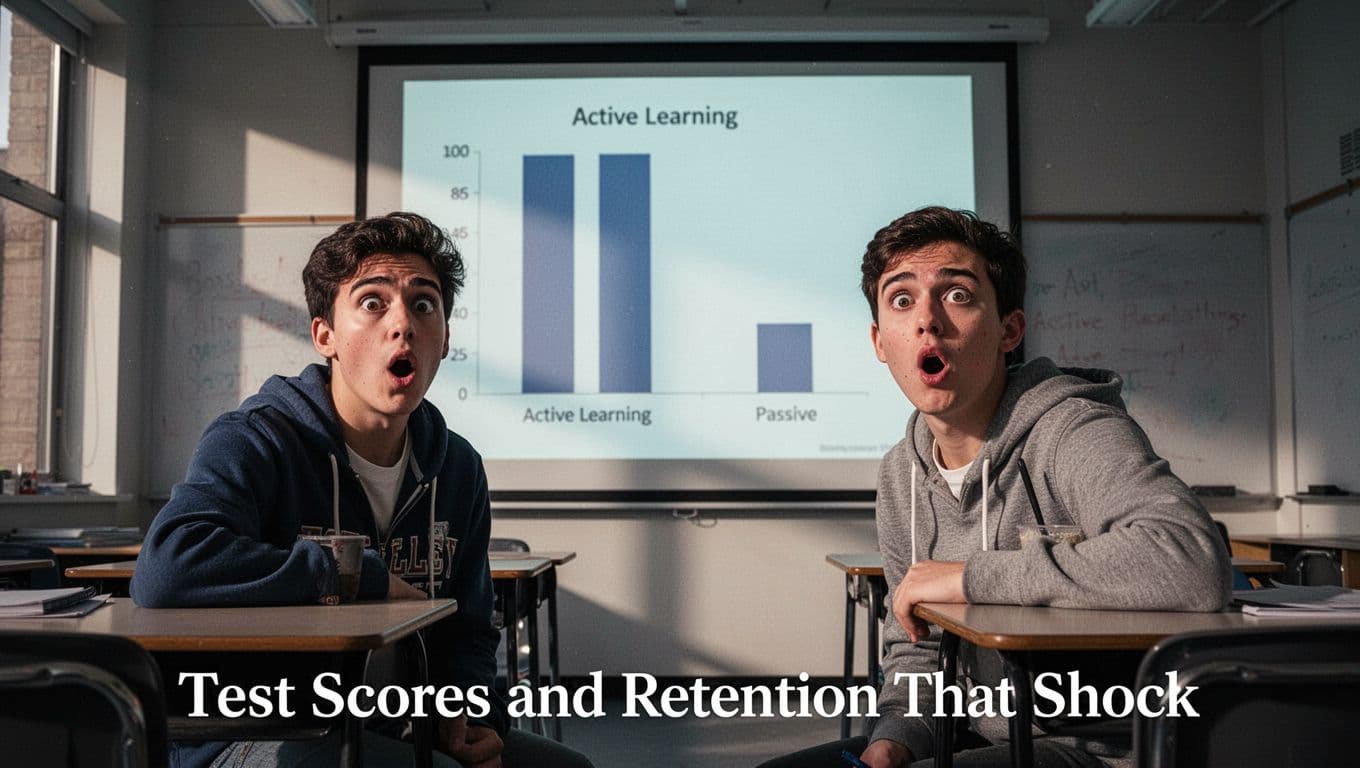
Active learners crush tests at 70% average scores. Passive groups hit just 45%. That’s a huge gap. Plus, active boosts retention by 54%. Students retain info weeks longer.
A 2025 study in the Journal on Excellence in College Teaching found this edge. Active groups scored higher, even though it felt harder at first. Students often react with shock. They expect passive to win because it seems easier.
Check these key findings:
- Test performance: Active at 70%, passive at 45% (from multiple trials).
- Retention edge: 54% better long-term recall for active.
- Failure drop: Passive has 55% higher fail rates overall.
For example, a Springer trial with medical students showed active sessions led to better learning. Passive felt fluent, but scores proved active superior. In short, active builds skills that last. Passive fades quick.
Engagement Numbers You Can’t Ignore
Active classes spark real talk. Students chat 13 times more than in lectures. Participation hits 62.7%, versus 5% in passive setups. Polls and chats jump 16 times.
Engageli’s 2026 stats highlight this. Physics exams show wins too. Active groups solve problems faster and score higher.
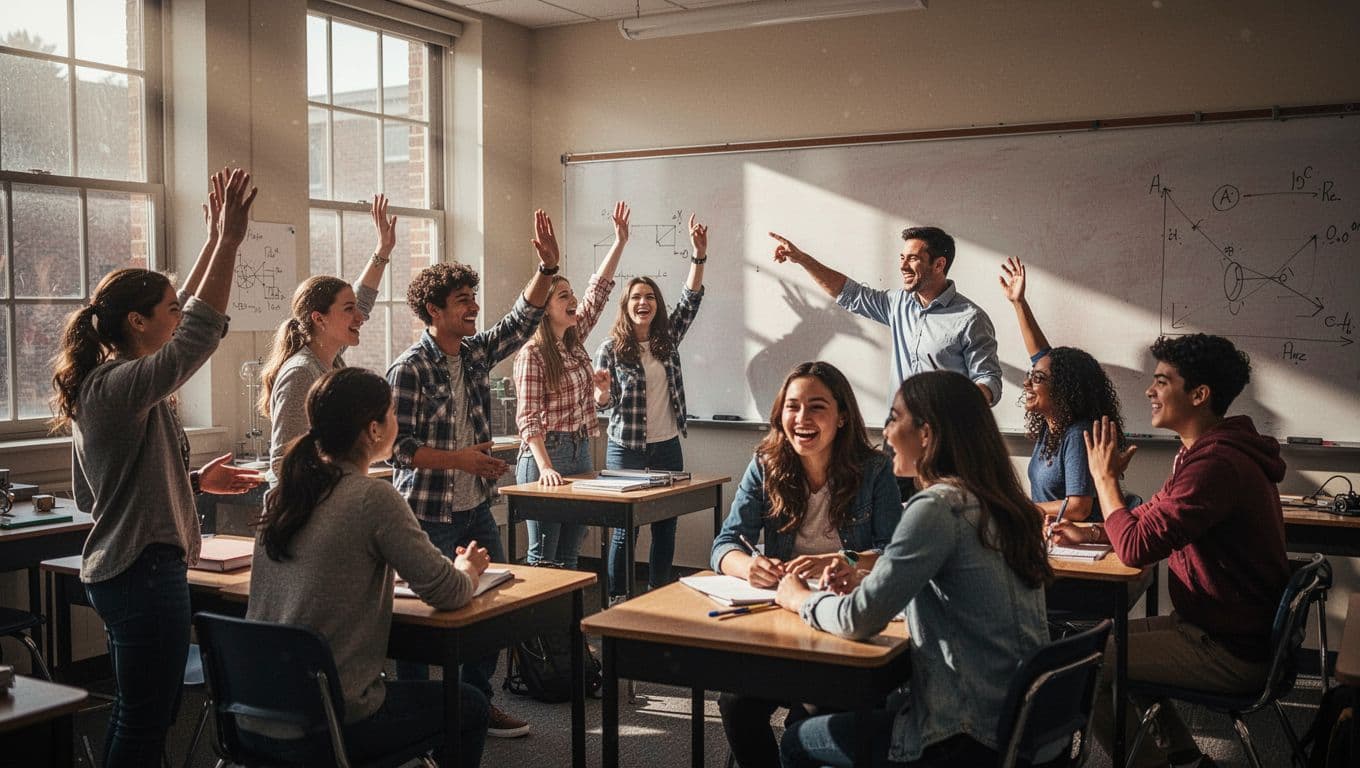
A 2026 Pearson study adds more. One AI interaction turns passive reading active 3 times over. In full courses, it’s 23 times likely. Active builds analysis and teamwork skills quicker through problem-solving.
Passive drops motivation and comprehension. Therefore, you slow down without engagement. Switch to active, and results speed up right away. These numbers prove it.
Three Big Ways Passive Learning Drags Your Progress
Passive learning feels productive at first. You watch videos or read notes, and progress seems steady. In reality, it slows you down in three major spots. Skills stay shallow without practice. Memory fades quick because weak links form. Motivation drops when real tests expose the gaps. These drags keep you spinning wheels instead of moving forward. Let’s break them down so you spot your own slowdowns.
Skills Stay Surface-Level Without Practice
You jot notes from a tutorial, but try the skill later and flop. Passive intake builds no real ties to life. Active practice connects ideas fast, while note-taking leaves you stuck at basics.
Take language apps. You swipe through lessons passively and know words on screen. However, speak to someone, and phrases vanish. Conversing builds fluency because you apply rules right away. Without hands-on work, skills hover surface-level. You can’t troubleshoot or adapt.
Experts call this cognitive offloading. Your brain skips deep processing by just storing info. See this analysis on cognitive offloading versus active recall. Passive dumps data without effort to link it. As a result, real tasks reveal the holes.
Switch it up. After notes, do one small practice. Code a simple script. Sketch a design. This cements skills quicker than hours of watching.
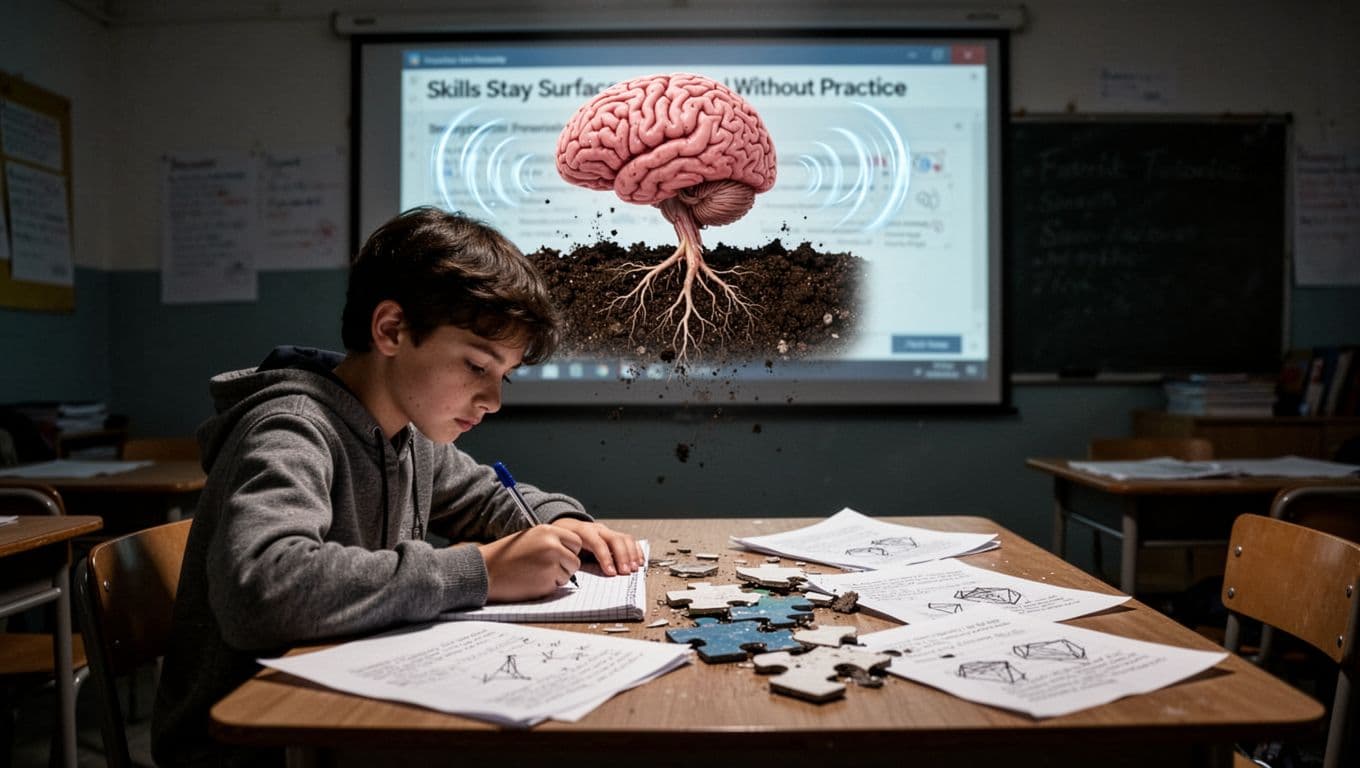
In short, passive keeps you reading theory. Active turns it into tools you own.
Memory Fade-Out Hits Hard and Fast
No practice means info slips away overnight. Passive hits your brain lightly, so retention tanks fast. Active grips deeper through recall and use.
Think Ebbinghaus forgetting curve. Without review or tests, you lose 70% in a day. Videos or podcasts follow that path because they skip mental effort. Hands-on quizzing or explaining slows the drop big time.
Recent data backs it. A 2026 Pearson study shows active tools boost lasting knowledge. Passive reading fades; AI quizzes make odds 23 times higher for deep recall. VR sims hit 62% retention versus 51% passive.
You read a chapter feeling sharp. Test yourself tomorrow, and blanks appear. That’s the fade. Therefore, grab a notebook after input. Quiz key points. Teach a friend. This fights decay and speeds real progress.
Besides, motivation stays high when wins stack up. Passive fails build doubt. Active keeps you hooked. Start small today, and watch memory hold stronger.
Ditch Passive: Quick Active Habits for Faster Wins
You spot the drags from passive learning. Now swap them out. These active learning tips take seconds to start and build skills fast. They create strong brain links right away. Retention jumps, motivation rises, and you win quicker. Best part? Pick one today for real speed.
A quick quiz after reading flips passive intake active. Cover your notes. Write what sticks from memory. This boosts recall 2-3 times, per this 2026 active recall guide. For example, finish a coding tutorial? Jot functions without peeking. Gaps show up fast. Fill them, and knowledge locks in.

Next, teach a friend what you just learned. Or post a simple summary online. You spot weak spots as you explain. Skills deepen because you rewire through output. Try it after a podcast. Break down key points in your words. Others ask questions. Boom, retention soars 50% higher.
Use AI for Instant Interactions That Triple Gains
Pearson studies show one AI chat turns reading active 3 times over. Ask it to quiz you or debate ideas. No setup needed. After a chapter, prompt: “Test me on main concepts.” It fires questions. You answer. Results stick because you wrestle with info actively.
In addition, summarize in your own words right away. Skip highlights. Close the book. Write three takeaways. This fights fade-out from day one. A language lesson? List five phrases you recall. Use them in sentences. Practice flows natural.
Five Quick Habits to Stack for Speed
Ready for more? Grab these habits. They fit busy days and stack wins.
- Break skills tiny. Master one guitar chord first. Then add rhythm. Overwhelm drops.
- Focus 15 minutes pure. Timer on. Phone away. Depth beats hours scattered.
- Interleave tasks. Switch math problems types every 10 minutes. Links form broader.
- Space reviews. Hit notes day 1, 3, 7. Memory holds weeks longer.
- Apply now. Use the skill at work today. Real use cements it 70% stronger.
These build faster skills because practice forges paths. Motivation climbs with quick wins. Start small. Pick two habits now. Track progress weekly. You speed past passive traps in days.
Conclusion
Passive learning drags you down with illusions of progress, weak skills, and fast memory fade.
Active learning fixes that. Studies show it boosts scores to 70% from 45%, plus stronger retention and engagement.
You already know the habits that speed things up.
Pick one right now, like self-quizzing or teaching a friend. Track your wins over a week.
Imagine crushing skills faster, without the slowdown.
What’s your first active switch? Drop it in the comments, and check our FAQ for more tips.